
AI Explained Simply
What Is Generative AI? A Simple Explanation
Generative AI is everywhere — but what does it actually mean? Here is a simple explanation without the technical jargon.
In simple terms:
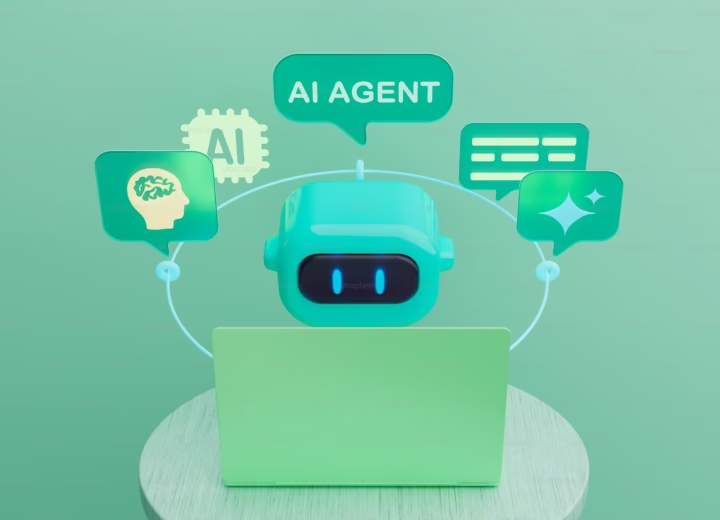
Generative AI is a type of artificial intelligence that can create new content such as text, images, presentations, computer code, audio and video.
How is Generative AI different from traditional AI?
Traditional artificial intelligence is often used to analyse information, recognise patterns or make predictions.
For example, a traditional AI system might analyse thousands of transactions and identify which ones look suspicious.
Generative AI goes a step further. Instead of only analysing information, it can use what it has learned to generate something new.
Traditional AI
Analyse data
Predict outcomes
Detect patterns
Classify information
Generative AI
Write content
Generate images
Create presentations
Produce code
A simple example
Imagine you need to write an email announcing a new project.
Instead of starting from a blank page, you could ask a generative AI tool:
“Write a friendly and professional email announcing our new AI project to the team.”
Within seconds, the AI can create a first draft. You can then ask it to make the message shorter, more formal, more persuasive or easier to understand.
This ability to work interactively is one of the reasons generative AI has become so useful in everyday work.
What can Generative AI create?
✍️ Text
Emails, reports, articles, summaries and proposals.
🎨 Images
Marketing visuals, illustrations and creative concepts.
💻 Code
Code examples, scripts, debugging support and documentation.
📊 Business Content
Presentations, plans, meeting notes and ideas.
Popular Generative AI tools
You may already have used generative AI without thinking about the technology behind it. Popular examples include:
- ChatGPT — for conversation, writing, analysis and problem solving.
- Microsoft Copilot — for AI assistance across Microsoft tools and work.
- Google Gemini — Google's generative AI assistant.
- Claude — an AI assistant used for writing, reasoning and analysis.
- AI image generators — tools that create images from written descriptions.
How can people use Generative AI at work?
Generative AI can help with many everyday activities, including:
- Summarising long documents
- Drafting emails and reports
- Brainstorming ideas
- Preparing meeting agendas
- Analysing information
- Creating presentations
- Writing job descriptions
- Generating marketing content
- Helping with research
- Creating first drafts of plans and proposals
Remember: AI is an assistant, not the final decision-maker
Generative AI can sometimes produce incorrect, incomplete or misleading information. Important outputs should still be reviewed by a person, especially when they involve customers, money, legal decisions, health, security or sensitive business information.
What is a prompt?
A prompt is simply the instruction or question you give to the AI.
For example:
Basic prompt:
“Write an email.”
Better prompt:
“Write a short, professional and friendly email inviting senior managers to a 45-minute AI awareness session.”
“Write an email.”
Better prompt:
“Write a short, professional and friendly email inviting senior managers to a 45-minute AI awareness session.”
The clearer your instruction, context and desired outcome, the more useful the response is likely to be.
Why is Generative AI important?
The biggest opportunity is not simply using AI to generate more content. It is using AI to help people work more effectively.
Organisations are increasingly exploring how AI can improve productivity, customer experience, decision-making, innovation and the way work gets done.
For individuals, understanding generative AI is quickly becoming an important workplace skill.
Start simple
You do not need to become an AI engineer to benefit from generative AI. Start with one everyday task, experiment with AI, review the result and gradually learn where it can genuinely save you time or improve your work.
Explore more practical AI insights, workshops and learning resources at AIWorkVerse.